%20scale(0.950000)'%20fill='none'%20stroke-linecap='round'%20stroke-linejoin='round'%3e%3cellipse%20cx='120'%20cy='120'%20rx='72'%20ry='112'%20transform='rotate(-36%20120%20120)'%20stroke='%230B1320'%20stroke-width='13.5'%20stroke-dasharray='188%2034%20146%2042'%20stroke-dashoffset='16'/%3e%3c!--%20Control%20/%20code%20brackets%20--%3e%3cpath%20d='M99%2070%20H78%20Q68%2070%2068%2080%20V104'%20stroke='%230B1320'%20stroke-width='13'/%3e%3cpath%20d='M141%2070%20H162%20Q172%2070%20172%2080%20V104'%20stroke='%230B1320'%20stroke-width='13'/%3e%3cpath%20d='M68%20136%20V160%20Q68%20170%2078%20170%20H100'%20stroke='%230B1320'%20stroke-width='13'/%3e%3cpath%20d='M172%20136%20V160%20Q172%20170%20162%20170%20H140'%20stroke='%230B1320'%20stroke-width='13'/%3e%3c!--%20Neural%20/%20decision%20circuit%20--%3e%3cpath%20d='M95%20103%20L126%20134'%20stroke='%230B1320'%20stroke-width='5.6'/%3e%3cpath%20d='M126%20134%20L147%20112'%20stroke='%230B1320'%20stroke-width='5.6'%20opacity='0.98'/%3e%3cpath%20d='M94%20126%20V154'%20stroke='%239EDB2F'%20stroke-width='9.5'/%3e%3cpath%20d='M149%2088%20V114'%20stroke='%239EDB2F'%20stroke-width='9.5'/%3e%3ccircle%20cx='95'%20cy='103'%20r='14'%20fill='%230B1320'%20stroke='none'/%3e%3ccircle%20cx='126'%20cy='134'%20r='13.5'%20fill='%230B1320'%20stroke='none'/%3e%3ccircle%20cx='149'%20cy='88'%20r='12.5'%20fill='%239EDB2F'%20stroke='none'/%3e%3ccircle%20cx='44'%20cy='123'%20r='15'%20fill='%239EDB2F'%20stroke='none'/%3e%3ccircle%20cx='92'%20cy='160'%20r='4.5'%20fill='%239EDB2F'%20stroke='none'%20opacity='0.92'/%3e%3c/g%3e%3cg%20id='wordmark'%20fill='%230B1320'%20transform='translate(300.000%20161.000)%20scale(0.038086%20-0.038086)'%3e%3cpath%20d='M158%200V1462H555V0Z'%20transform='translate(0.000%200)'/%3e%3cpath%20d='M803%200H408V1139H51V1462H1159V1139H803Z'%20transform='translate(673.615%200)'/%3e%3cpath%20d='M1550%200H1032L498%201030H489Q508%20787%20508%20659V0H158V1462H674L1206%20446H1212Q1198%20667%201198%20801V1462H1550Z'%20transform='translate(1844.231%200)'/%3e%3cpath%20d='M682%20-20Q399%20-20%20242.5%20130.5Q86%20281%2086%20559Q86%20846%20231.0%20999.5Q376%201153%20645%201153Q901%201153%201040.5%201019.5Q1180%20886%201180%20635V461H481Q485%20366%20550.5%20312.0Q616%20258%20729%20258Q832%20258%20918.5%20277.5Q1005%20297%201106%20344V63Q1014%2016%20916.0%20-2.0Q818%20-20%20682%20-20ZM659%20887Q590%20887%20543.5%20843.5Q497%20800%20489%20707H825Q823%20789%20778.5%20838.0Q734%20887%20659%20887Z'%20transform='translate(3512.846%200)'/%3e%3cpath%20d='M942%200%20893%20141H870Q821%2063%20733.5%2021.5Q646%20-20%20528%20-20Q341%20-20%20237.0%2088.5Q133%20197%20133%20395V1133H524V514Q524%20403%20555.5%20346.0Q587%20289%20659%20289Q760%20289%20803.0%20368.5Q846%20448%20846%20637V1133H1237V0Z'%20transform='translate(4739.462%200)'/%3e%3cpath%20d='M819%201153Q870%201153%20916%201145L938%201141L903%20772Q855%20784%20770%20784Q642%20784%20584.0%20725.5Q526%20667%20526%20557V0H135V1133H426L487%20952H506Q555%201042%20642.5%201097.5Q730%201153%20819%201153Z'%20transform='translate(6072.077%200)'/%3e%3cpath%20d='M1217%20569Q1217%20291%201067.5%20135.5Q918%20-20%20649%20-20Q391%20-20%20238.5%20139.0Q86%20298%2086%20569Q86%20846%20235.5%20999.5Q385%201153%20655%201153Q822%201153%20950.0%201082.0Q1078%201011%201147.5%20878.5Q1217%20746%201217%20569ZM483%20569Q483%20423%20522.0%20346.5Q561%20270%20653%20270Q744%20270%20781.5%20346.5Q819%20423%20819%20569Q819%20714%20781.0%20788.0Q743%20862%20651%20862Q561%20862%20522.0%20788.5Q483%20715%20483%20569Z'%20transform='translate(6993.692%200)'/%3e%3cpath%20d='M1550%200H1032L498%201030H489Q508%20787%20508%20659V0H158V1462H674L1206%20446H1212Q1198%20667%201198%20801V1462H1550Z'%20transform='translate(8259.308%200)'/%3e%3cpath%20d='M682%20-20Q399%20-20%20242.5%20130.5Q86%20281%2086%20559Q86%20846%20231.0%20999.5Q376%201153%20645%201153Q901%201153%201040.5%201019.5Q1180%20886%201180%20635V461H481Q485%20366%20550.5%20312.0Q616%20258%20729%20258Q832%20258%20918.5%20277.5Q1005%20297%201106%20344V63Q1014%2016%20916.0%20-2.0Q818%20-20%20682%20-20ZM659%20887Q590%20887%20543.5%20843.5Q497%20800%20489%20707H825Q823%20789%20778.5%20838.0Q734%20887%20659%20887Z'%20transform='translate(9927.923%200)'/%3e%3cpath%20d='M690%20289Q769%20289%20879%20328V43Q800%209%20728.5%20-5.5Q657%20-20%20561%20-20Q364%20-20%20277.0%2076.5Q190%20173%20190%20373V840H53V999L227%201122L328%201360H584V1133H862V840H584V399Q584%20289%20690%20289Z'%20transform='translate(11154.538%200)'/%3e%3c/g%3e%3c/svg%3e)
%20scale(0.950000)'%20fill='none'%20stroke-linecap='round'%20stroke-linejoin='round'%3e%3cellipse%20cx='120'%20cy='120'%20rx='72'%20ry='112'%20transform='rotate(-36%20120%20120)'%20stroke='%23FFFFFF'%20stroke-width='13.5'%20stroke-dasharray='188%2034%20146%2042'%20stroke-dashoffset='16'/%3e%3c!--%20Control%20/%20code%20brackets%20--%3e%3cpath%20d='M99%2070%20H78%20Q68%2070%2068%2080%20V104'%20stroke='%23FFFFFF'%20stroke-width='13'/%3e%3cpath%20d='M141%2070%20H162%20Q172%2070%20172%2080%20V104'%20stroke='%23FFFFFF'%20stroke-width='13'/%3e%3cpath%20d='M68%20136%20V160%20Q68%20170%2078%20170%20H100'%20stroke='%23FFFFFF'%20stroke-width='13'/%3e%3cpath%20d='M172%20136%20V160%20Q172%20170%20162%20170%20H140'%20stroke='%23FFFFFF'%20stroke-width='13'/%3e%3c!--%20Neural%20/%20decision%20circuit%20--%3e%3cpath%20d='M95%20103%20L126%20134'%20stroke='%23FFFFFF'%20stroke-width='5.6'/%3e%3cpath%20d='M126%20134%20L147%20112'%20stroke='%23FFFFFF'%20stroke-width='5.6'%20opacity='0.98'/%3e%3cpath%20d='M94%20126%20V154'%20stroke='%239EDB2F'%20stroke-width='9.5'/%3e%3cpath%20d='M149%2088%20V114'%20stroke='%239EDB2F'%20stroke-width='9.5'/%3e%3ccircle%20cx='95'%20cy='103'%20r='14'%20fill='%23FFFFFF'%20stroke='none'/%3e%3ccircle%20cx='126'%20cy='134'%20r='13.5'%20fill='%23FFFFFF'%20stroke='none'/%3e%3ccircle%20cx='149'%20cy='88'%20r='12.5'%20fill='%239EDB2F'%20stroke='none'/%3e%3ccircle%20cx='44'%20cy='123'%20r='15'%20fill='%239EDB2F'%20stroke='none'/%3e%3ccircle%20cx='92'%20cy='160'%20r='4.5'%20fill='%239EDB2F'%20stroke='none'%20opacity='0.92'/%3e%3c/g%3e%3cg%20id='wordmark'%20fill='%23FFFFFF'%20transform='translate(300.000%20161.000)%20scale(0.038086%20-0.038086)'%3e%3cpath%20d='M158%200V1462H555V0Z'%20transform='translate(0.000%200)'/%3e%3cpath%20d='M803%200H408V1139H51V1462H1159V1139H803Z'%20transform='translate(673.615%200)'/%3e%3cpath%20d='M1550%200H1032L498%201030H489Q508%20787%20508%20659V0H158V1462H674L1206%20446H1212Q1198%20667%201198%20801V1462H1550Z'%20transform='translate(1844.231%200)'/%3e%3cpath%20d='M682%20-20Q399%20-20%20242.5%20130.5Q86%20281%2086%20559Q86%20846%20231.0%20999.5Q376%201153%20645%201153Q901%201153%201040.5%201019.5Q1180%20886%201180%20635V461H481Q485%20366%20550.5%20312.0Q616%20258%20729%20258Q832%20258%20918.5%20277.5Q1005%20297%201106%20344V63Q1014%2016%20916.0%20-2.0Q818%20-20%20682%20-20ZM659%20887Q590%20887%20543.5%20843.5Q497%20800%20489%20707H825Q823%20789%20778.5%20838.0Q734%20887%20659%20887Z'%20transform='translate(3512.846%200)'/%3e%3cpath%20d='M942%200%20893%20141H870Q821%2063%20733.5%2021.5Q646%20-20%20528%20-20Q341%20-20%20237.0%2088.5Q133%20197%20133%20395V1133H524V514Q524%20403%20555.5%20346.0Q587%20289%20659%20289Q760%20289%20803.0%20368.5Q846%20448%20846%20637V1133H1237V0Z'%20transform='translate(4739.462%200)'/%3e%3cpath%20d='M819%201153Q870%201153%20916%201145L938%201141L903%20772Q855%20784%20770%20784Q642%20784%20584.0%20725.5Q526%20667%20526%20557V0H135V1133H426L487%20952H506Q555%201042%20642.5%201097.5Q730%201153%20819%201153Z'%20transform='translate(6072.077%200)'/%3e%3cpath%20d='M1217%20569Q1217%20291%201067.5%20135.5Q918%20-20%20649%20-20Q391%20-20%20238.5%20139.0Q86%20298%2086%20569Q86%20846%20235.5%20999.5Q385%201153%20655%201153Q822%201153%20950.0%201082.0Q1078%201011%201147.5%20878.5Q1217%20746%201217%20569ZM483%20569Q483%20423%20522.0%20346.5Q561%20270%20653%20270Q744%20270%20781.5%20346.5Q819%20423%20819%20569Q819%20714%20781.0%20788.0Q743%20862%20651%20862Q561%20862%20522.0%20788.5Q483%20715%20483%20569Z'%20transform='translate(6993.692%200)'/%3e%3cpath%20d='M1550%200H1032L498%201030H489Q508%20787%20508%20659V0H158V1462H674L1206%20446H1212Q1198%20667%201198%20801V1462H1550Z'%20transform='translate(8259.308%200)'/%3e%3cpath%20d='M682%20-20Q399%20-20%20242.5%20130.5Q86%20281%2086%20559Q86%20846%20231.0%20999.5Q376%201153%20645%201153Q901%201153%201040.5%201019.5Q1180%20886%201180%20635V461H481Q485%20366%20550.5%20312.0Q616%20258%20729%20258Q832%20258%20918.5%20277.5Q1005%20297%201106%20344V63Q1014%2016%20916.0%20-2.0Q818%20-20%20682%20-20ZM659%20887Q590%20887%20543.5%20843.5Q497%20800%20489%20707H825Q823%20789%20778.5%20838.0Q734%20887%20659%20887Z'%20transform='translate(9927.923%200)'/%3e%3cpath%20d='M690%20289Q769%20289%20879%20328V43Q800%209%20728.5%20-5.5Q657%20-20%20561%20-20Q364%20-20%20277.0%2076.5Q190%20173%20190%20373V840H53V999L227%201122L328%201360H584V1133H862V840H584V399Q584%20289%20690%20289Z'%20transform='translate(11154.538%200)'/%3e%3c/g%3e%3c/svg%3e)
Why time-to-market is changing in the AI-native software era
Speed no longer comes from typing code faster. It comes from turning product questions into system changes you have checked, can explain, and can deploy safely.
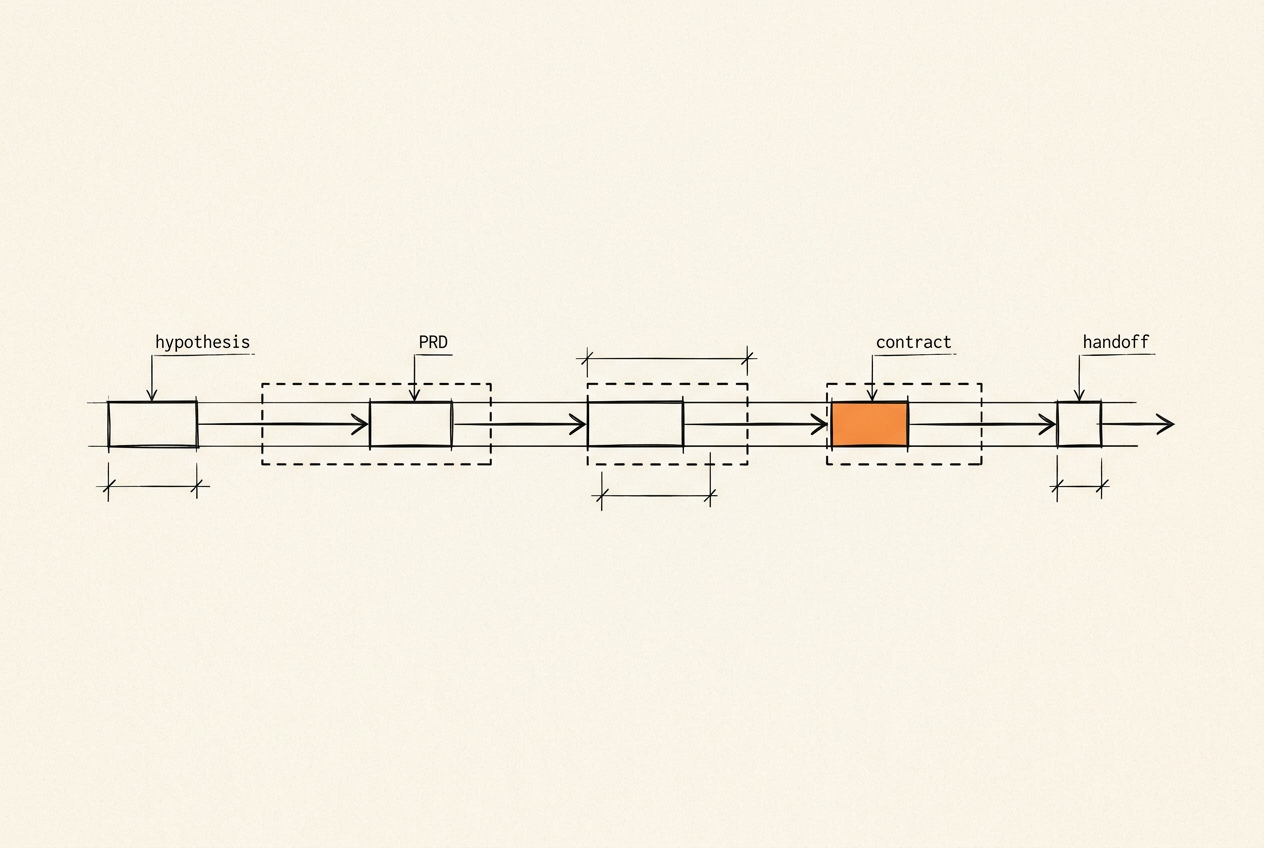
Time to market used to be constrained by familiar factors: team size, planning cycles, implementation capacity, review queues, release process, and the cost of changing direction after a product decision had already been made.
Those constraints still matter. But stronger AI models are changing where the pressure shows up.
The question is no longer just: Can we build this? The sharper question is: Can we learn, decide, build, verify, and adapt before the opportunity changes?
That is why time to market is becoming a survival metric for startups and larger companies alike. Markets move faster. User expectations change faster. Competitors can test more ideas. Internal teams are expected to respond to feedback in shorter cycles. The ability to turn a signal into a verified product change becomes a real advantage.
AI Does Not Automatically Reduce Time To Market
It is tempting to reduce the whole topic to coding speed. If AI can write code faster, the product should ship faster. In practice, that view is incomplete.
Software delivery is a system. A feature has to move through product thinking, requirements, architecture, data decisions, implementation, testing, review, deployment, and feedback. If only one part speeds up, the bottleneck usually shifts somewhere else.
AWS makes this point clearly in its writing on AI assistants: the right measure is not just individual developer speed, but customer cycle time, delivered business value, development throughput, quality, reliability, and time to resolve security issues.
DORA's 2025 research describes AI as an amplifier. It magnifies the strengths of high-performing organizations and the weaknesses of struggling ones. That means AI can speed up a strong delivery system, but it can also expose unclear requirements, brittle architecture, poor testing, and weak review processes.
The Real Bottleneck Is Often Upstream
Many MVPs do not fail because the code was impossible to write. They fail because:
- the product goal was not clear;
- the MVP boundary kept expanding;
- business rules were undocumented;
- data sources were poorly understood;
- integrations were underestimated;
- APIs were designed too late;
- test strategy was not defined;
- ownership of decisions was unclear.
AI can make implementation faster, but it cannot safely make up for a product that has not been scoped or an architecture that has not been thought through. That is why AI-native delivery should start before coding.
What AI-Native Delivery Actually Changes
An AI-native delivery process can shorten the path from decision to a verified software change by giving each stage more structure.
- Product uncertainty becomes a scoped hypothesis.
- Scope becomes user flows, business rules, and technical assumptions.
- Technical assumptions become architecture, data models, API contracts, tasks, and quality gates.
- AI agents and AI-assisted tools then work within that structure.
- Tests, review, and handoff keep the work usable.
The goal is not to produce more code. It is to shorten the time between a business decision and a product change that can be reviewed, tested, released, and improved.
What Founders Should Look For
If you want to reduce time to market, do not ask only, “How quickly can this be coded?” Ask instead:
- What does this version need to prove?
- What can you leave out safely?
- Which architecture decisions need to be made now?
- Which assumptions about the data are risky?
- What should be tested before release?
- What needs human review?
- What artifacts will make the next iteration faster?
These questions matter because time to market is not just about the first release. It also includes the second, third, and fourth change after real users start reacting.
How ITNeuroNet Helps
ITNeuroNet helps founders and teams shorten product delivery cycles with an AI-native way of working:
- product and technical discovery;
- MVP scope definition;
- architecture and delivery planning;
- AI-assisted implementation;
- implementation with testing in mind;
- review materials and handoff documentation;
- private delivery visibility.
This approach is useful when speed matters, but relying on uncontrolled AI-generated code would create too much risk.
Discuss your project
If your product opportunity depends on moving faster without losing technical control, talk through your project with me. I will help identify what is slowing the path from idea to a verified product change.
More on AI-Assisted Delivery
- Article · Apr 22, 2026
Faster code is not faster delivery
Why faster code generation does not shorten a project by itself, and what else must be in place for AI-supported development to save time instead of creating rework.
- Article · Mar 18, 2026
Why AI agent projects fail before the first prompt
When an agent performs badly, the problem is often not the prompt. More often, its role is unclear or it lacks the right tools, permissions, data limits, and review process.
- Article · Jan 28, 2026
What to test in AI-assisted software delivery
A practical testing approach for AI-supported development: what to check with types, contracts, unit tests, integration tests, and acceptance tests, and which parts are not worth automating.